Cracks that grow or change
Hairline cracks can stay small. Cracks that widen, step through block, or keep changing need a closer look.
Structural foundation problems
Cracks, moving basement walls, sloping floors, sticking doors, or part of a home sitting lower can point to different foundation problems. Foundation repair starts by identifying where movement is happening and matching the problem to the right repair path.
Foundation repair addresses structural problems when part of a foundation, wall, or supporting area has cracked, moved, bowed, sunk, or settled. The right repair path depends on where the movement is occurring. A localized crack may need foundation crack repair, a moving wall may need foundation wall repair, and a sinking area may need foundation settlement repair or deeper foundation support. Start with what you can see, then request foundation repair help.
Hairline cracks can stay small. Cracks that widen, step through block, or keep changing need a closer look.
A basement or foundation wall that bows, leans, or shows gaps at the corners can point to wall movement.
A dropped corner, a porch that has pulled away, or one side sitting lower can point to foundation settlement.
Floors that slope along with cracks, sticking doors, or a dropped area can be a structural sign, not only a floor finish issue.
Doors or windows that begin sticking alongside other movement signs can belong with a foundation repair question.
Foundation repair is the parent structural service. These four paths cover the main problems homeowners notice. Each has its own page for the details.
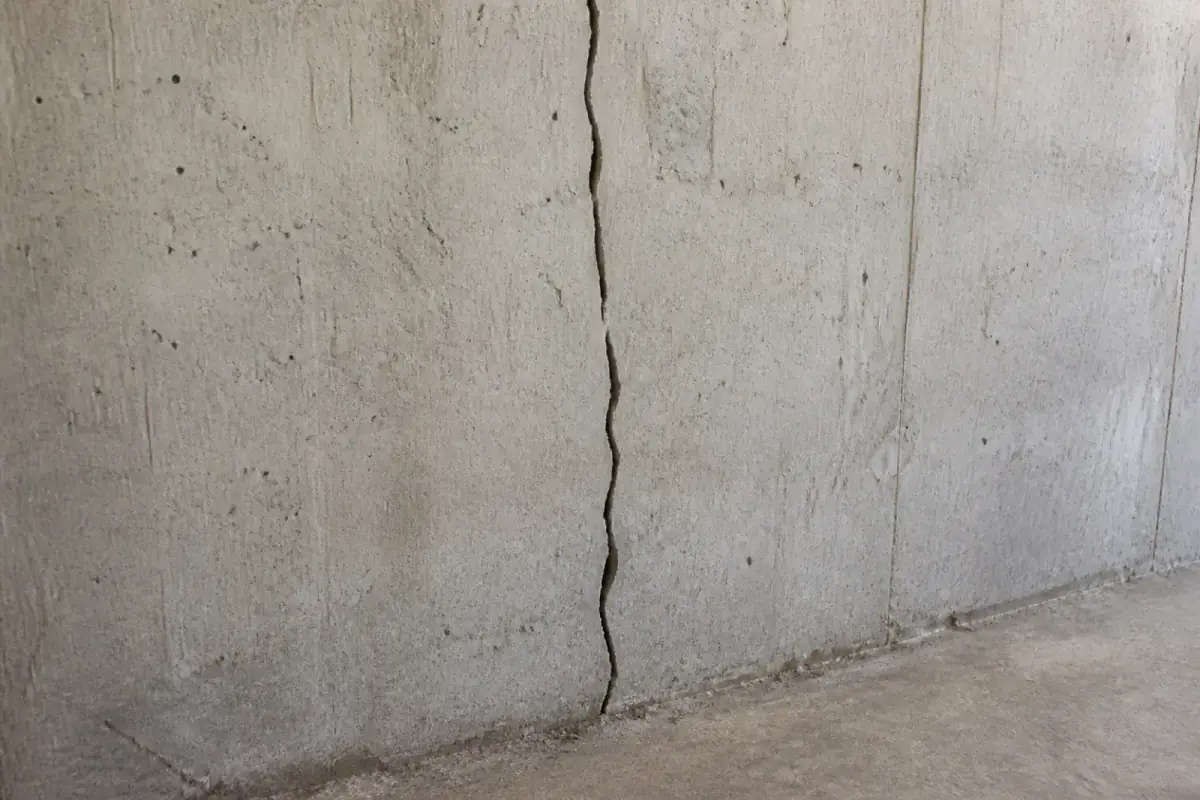
For foundation or basement wall cracks where the problem appears localized to the crack.
Foundation crack repair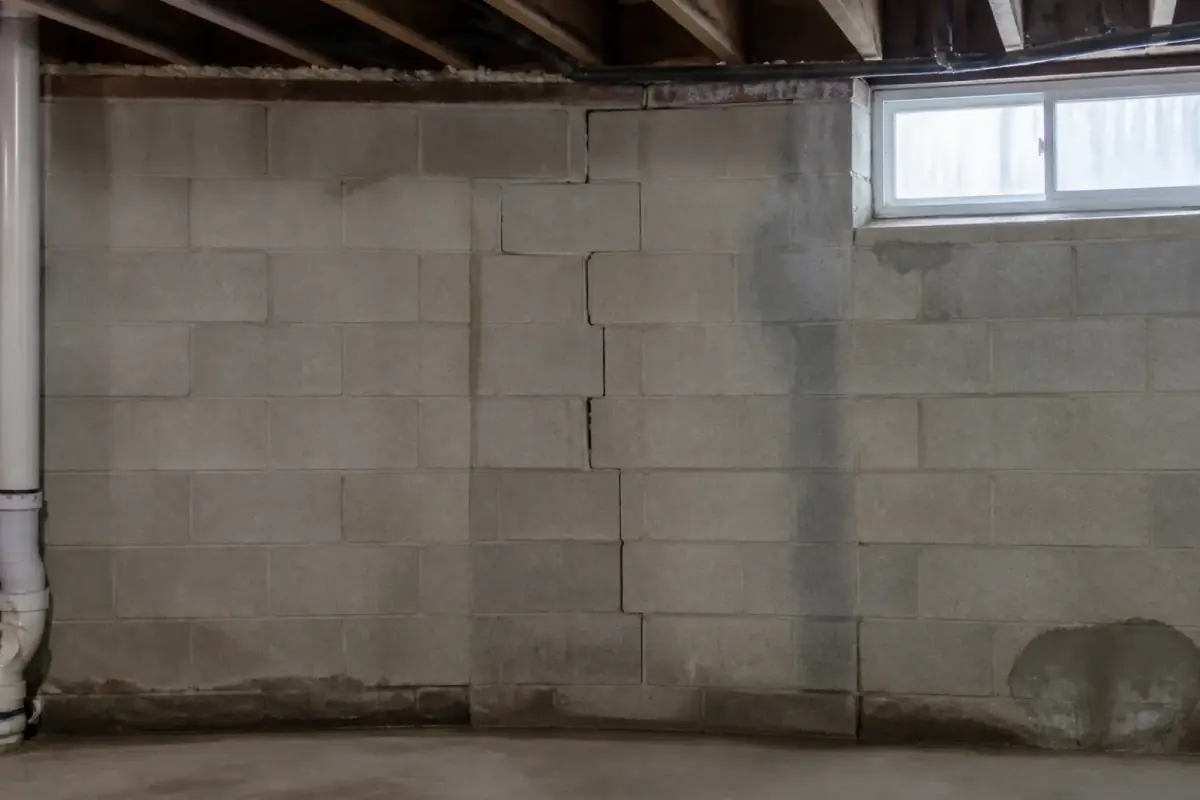
For basement or foundation walls that are bowing, leaning, damaged, or moving.
Foundation wall repair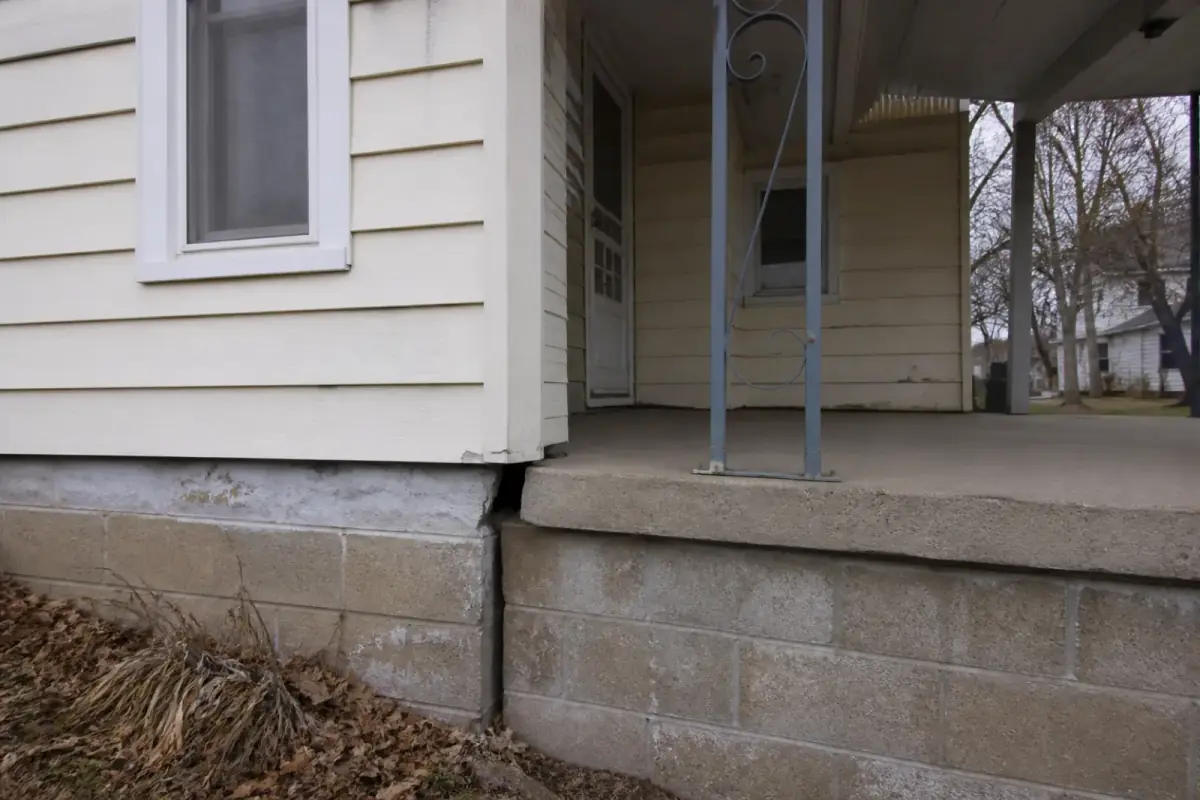
For sinking, settling, dropped areas, or movement caused by changing support beneath the foundation.
Foundation settlement repair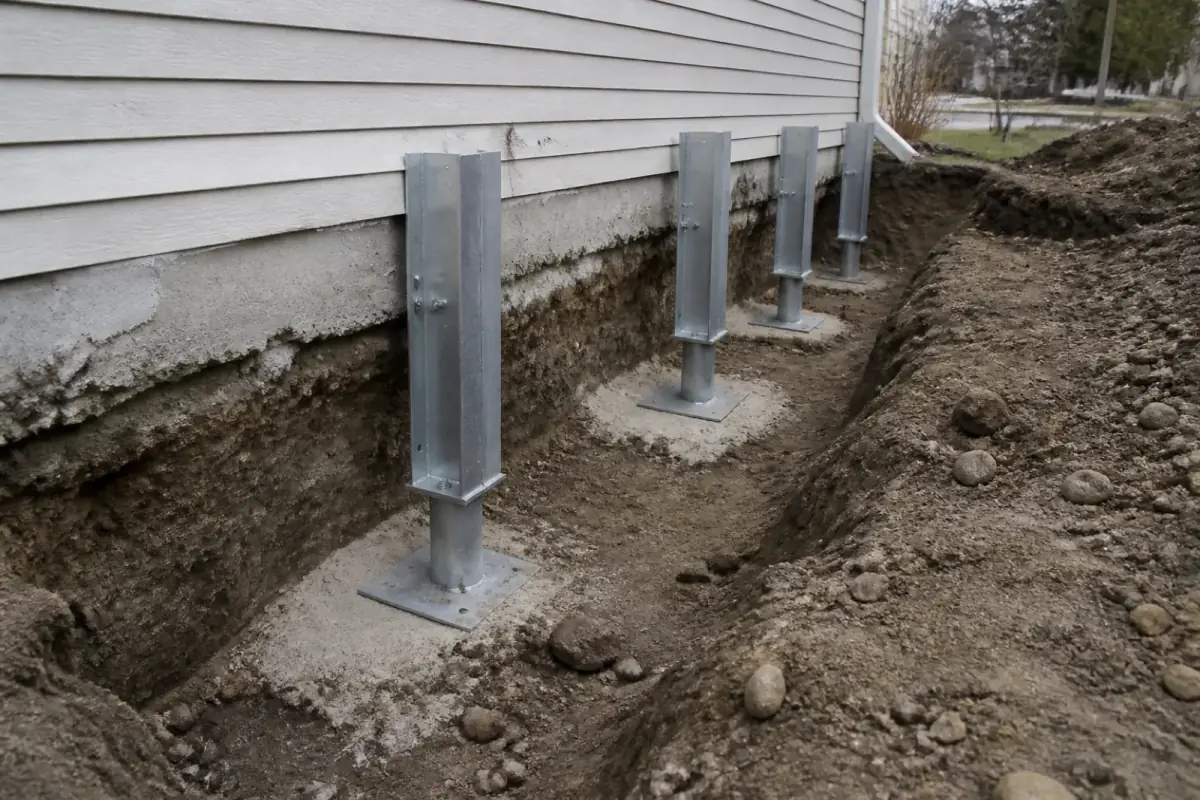
For some settlement conditions where deeper structural support may be relevant.
Foundation pier installationUse what you can see to find the most relevant next page. You do not need the repair method name first.
What you notice
One localized foundation crack
May point to
Local crack issue
Relevant service
What you notice
A crack is growing or appears with broader movement
May point to
A wider structural foundation problem
Relevant service
What you notice
Basement wall bows, leans, or moves inward
May point to
Foundation wall movement
Relevant service
What you notice
Part of the home or foundation appears lower
May point to
Foundation settlement
Relevant service
What you notice
Sloping floors appear with cracks, sticking doors, or a dropped area
May point to
Possible foundation settlement
Relevant service
What you notice
Foundation settlement may require deeper structural support
May point to
Pier or underpinning support may be relevant
Relevant service
What you notice
A bowing wall is the main problem
May point to
Wall movement is the starting point
Relevant service
What you notice
Water or seepage is the main problem rather than structural movement
May point to
A water-control issue may be first
Relevant service
These signs can help identify the next service to consider, but they are not a diagnosis. The location, amount of movement, and overall foundation condition all matter.
The repair path depends on the condition in front of you. Localized damage may call for local repair. A moving or weakened structural area may call for stabilization. Settlement that needs deeper support may involve underpinning or foundation piers.
For a suitable localized problem such as one foundation crack. Start with foundation crack repair when the issue appears limited to the crack.
For movement affecting a foundation wall or a broader structural area. A moving wall may need foundation wall repair. A sinking area may need foundation settlement repair.
For some settlement conditions, deeper support through foundation piers or underpinning may be considered. See foundation pier installation. Method details belong on that page.
Residential foundations, footings, foundation walls, soil-bearing support, and structural loads work together as one system. The HUD Residential Structural Design Guide describes how those parts support a house.
Foundation movement can develop when the support around a house changes. The cause is often a mix of soil support, water around the foundation, and the age or construction of the home.
Support under a footing can change over time. That can show up as cracks, a dropped area, or a wall that no longer looks straight.
Water collecting beside the house can add pressure and keep soil conditions changing. Water is a related issue when it is part of what you see.
Older walls, footings, or original drainage may no longer match how the lot handles rain today.
Building Science Corporation foundation water-control guidance notes that water accumulation and drainage around a foundation can affect moisture conditions and should be treated as a related issue when relevant.
Cost depends on the type of foundation problem, how much has moved, the repair path, and access to the work. This page does not publish price ranges.
A leaking crack and a sinking corner are not planned the same way.
Early signs are usually simpler to address than a wall or footing that has moved a lot.
The condition of the wall, footing, or supporting area can change the repair path.
Stabilization and deeper pier support are different scopes.
Finished rooms, tight lots, and exterior obstacles all change the job.
Some repair paths need more access around the foundation than others.
Step 1 of 4You start
A crack, wall movement, floor slope, sticking door or window, or a sinking area.
Step 2 of 4Timing
Basement wall, foundation wall, floor area, one side of the home, or another location.
Step 3 of 4Also note
Water, bowing, settlement, repeated cracking, or other changes that appear together.
Step 4 of 4You know
Foundation repair, crack repair, wall repair, settlement repair, or pier support.
Akron homes can show foundation movement after heavy rain, freeze-thaw, and seasonal weather changes. Drainage around the house can send water toward the foundation. Existing cracks or openings can also become easier to see when conditions stay wet. You do not need the repair method name first. Start with what has changed, where you see it, and whether it appears to be getting worse. That information can help match the problem to foundation repair or a related structural service.
For a localized foundation or basement wall crack.
Foundation crack repairFor a basement or foundation wall that is damaged or moving.
Foundation wall repairFor a foundation area that has sunk, settled, or dropped.
Foundation settlement repairFor some settlement conditions where deeper support may be considered.
Foundation pier installationLook at what has changed. Growing cracks, a wall that bows or leans, sloping floors, sticking doors or windows, or part of the home sitting lower can all point to a foundation problem. Those signs help match the next service. They are not a diagnosis.
No. A localized crack may need crack-focused repair. Cracks that appear with broader movement may point toward a wider foundation issue. Start with foundation crack repair when the problem looks limited to the crack.
Wall repair focuses primarily on damaged or moving foundation walls. Settlement repair focuses on a foundation area that has sunk or settled. Both sit under foundation repair when the structural problem is still being sorted.
Pier support may be considered for some settlement conditions where deeper support is needed. See foundation pier installation. Method details belong on that page.
Cost depends on the type of problem, the affected area, how much movement has occurred, the repair path, access, and whether stabilization or deeper pier support may be required. This page does not publish price ranges.
You do not need to know which repair method is needed. Start with what you can see:
That information can help point toward the right foundation repair service. Serving Akron, Ohio.