
What you see
One wall crack
Possible issue
Local crack problem
Relevant service
Basement wall support
Cracks, bowing, inward movement, damaged block, or a basement wall that keeps changing can point to different foundation problems.
Some walls may be suitable for reinforcement or stabilization. More heavily damaged areas may need broader repair. The right next step depends on what has changed, how much the wall has moved, and what may be putting pressure on it.
Horizontal cracks, stair-step cracks, bowing, leaning, damaged masonry, or a basement wall that keeps changing can all point to a wall problem. A visible crack alone does not automatically mean the whole wall needs major repair. Simply filling a crack may not solve a wall that is actively moving.
If the wall looks different than it did last year, start with what you see. Then match it to basement wall repair, a support method, or another related service.
Use what you can see to find the most relevant next page. You do not need the repair name first.
What you see
One wall crack
Possible issue
Local crack problem
Relevant service
What you see
Wall curves or bows inward
Possible issue
Structural wall movement
Relevant service
What you see
Wall is moving but remains largely intact
Possible issue
Stabilization may be considered
Relevant service
What you see
Suitable wall needs reinforcement
Possible issue
Carbon fiber may be relevant
Relevant service
What you see
Inward movement may need anchoring
Possible issue
Wall-anchor system may be relevant
Relevant service
What you see
Wall may need strong interior bracing
Possible issue
Steel support may be relevant
Relevant service
What you see
Block or masonry is badly deteriorated
Possible issue
Broader wall repair may be needed
Relevant service
What you see
Wall is damaged and leaking
Possible issue
Water-control issue may also exist
Relevant service
These signs can help narrow the problem, but they are not a diagnosis. The wall condition, amount of movement, material, and cause of the damage all matter.
Not every damaged basement wall requires complete replacement. Some walls can be repaired or stabilized in place. Others need broader masonry work because the wall has lost strength.
More severe conditions may require broader masonry repair, rebuilding, or replacement of damaged wall sections. If the problem is broader than one wall, see foundation repair in Akron. Ohio Residential Code foundation requirements set structural rules for residential foundations. The right path still depends on the wall in front of you.
These are the main support methods for a moving or weakened basement wall. Each option has its own page with the details.
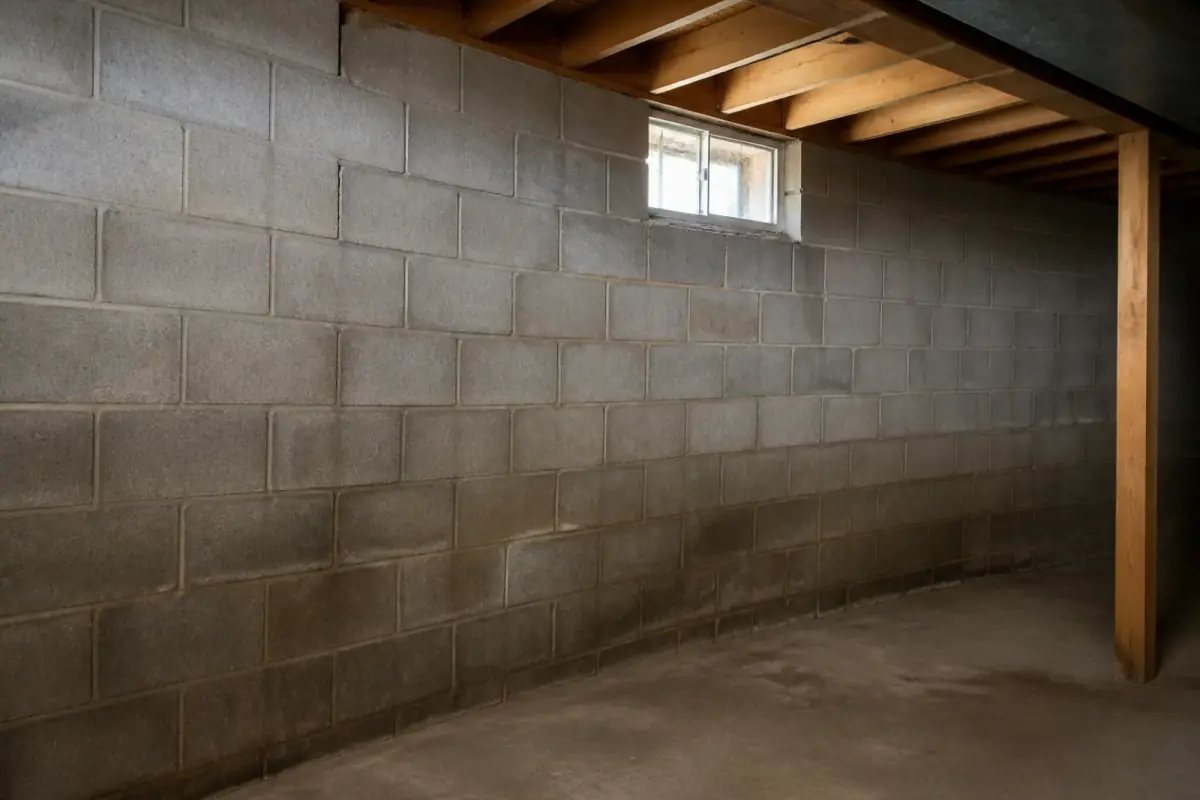
For a basement wall that curves or leans inward. Start here when the wall itself is moving, not just showing a surface crack.
Bowing wall repair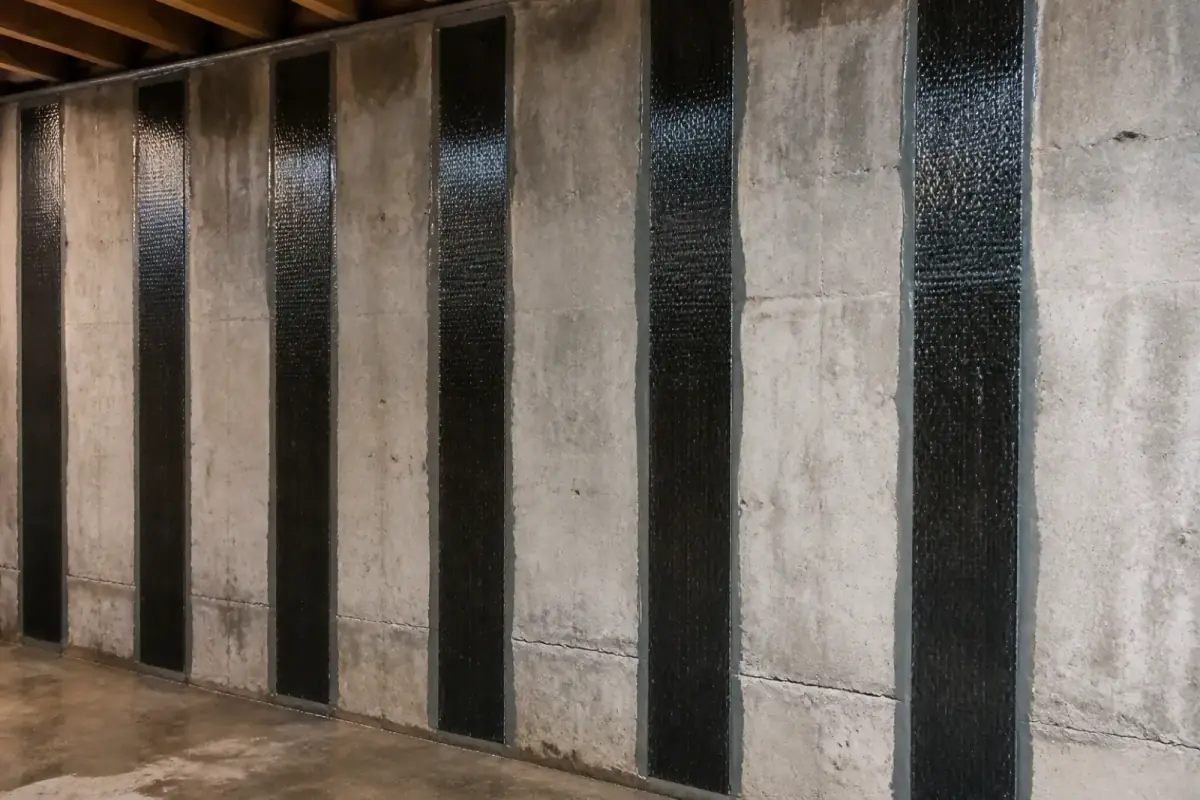
May be relevant when a suitable wall needs interior reinforcement and remains largely intact.
Carbon fiber wall repair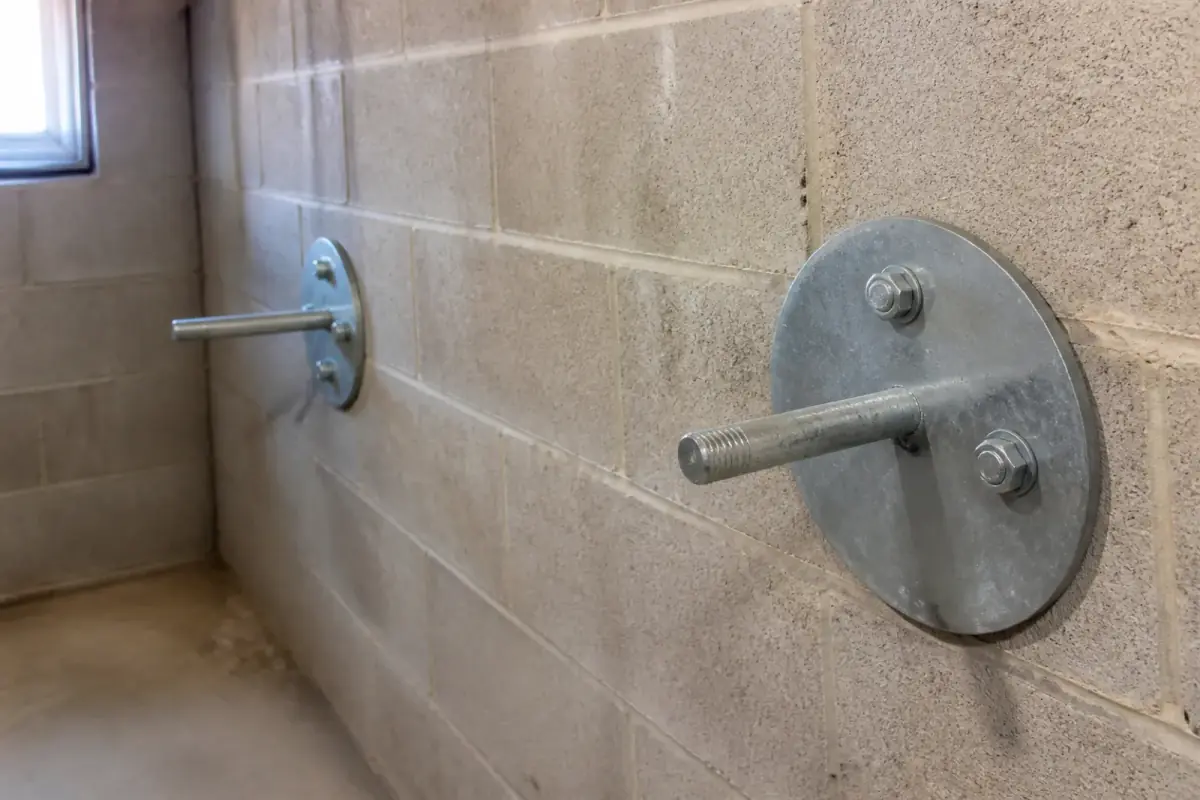
May be relevant when inward movement needs anchoring from the soil outside the wall.
Wall anchor installation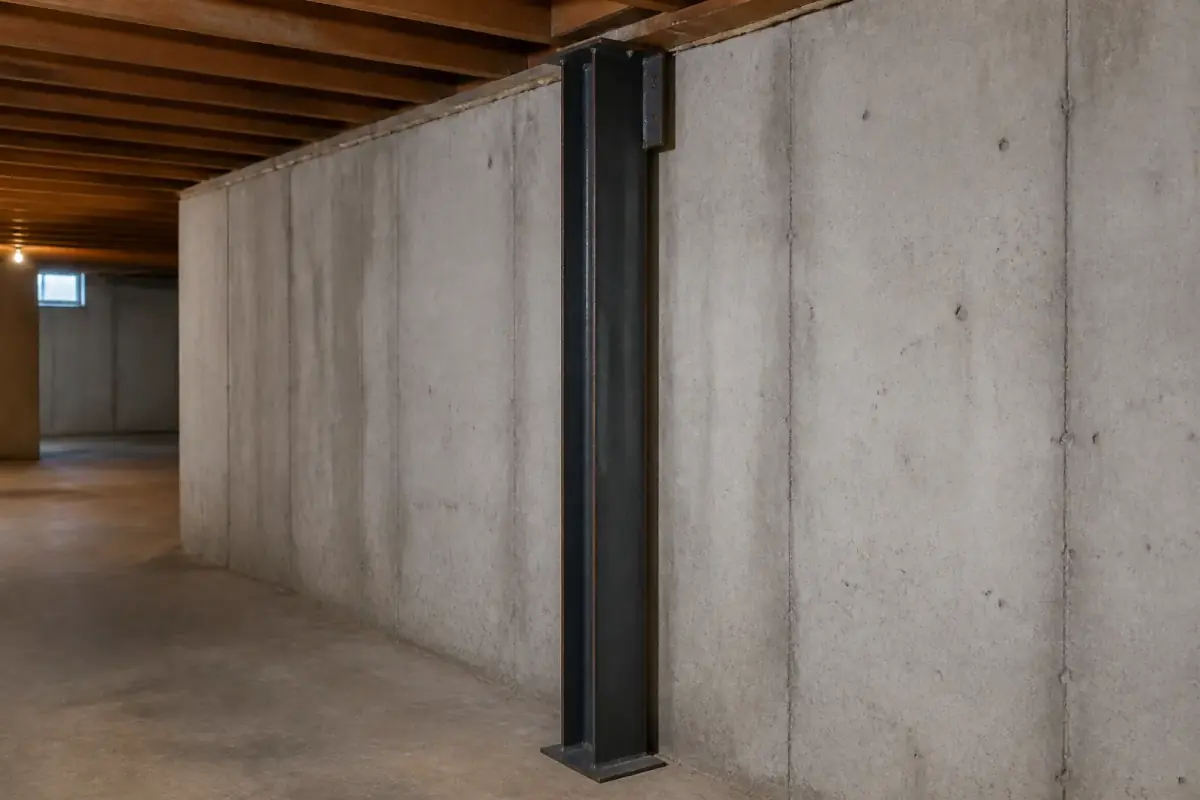
May be relevant when a wall needs strong interior bracing to help hold it in place.
Steel beam wall repairA buried basement wall holds back the soil around the house. When that soil stays wet, the load on the wall can rise. Poor drainage, groundwater, and freeze/thaw around the foundation can add to that pressure. Changes beside the house, such as a new grade or fill, can also change how the wall is loaded.
Masonry or mortar can deteriorate over time. Broader foundation movement can affect a wall as well. Many Akron basements are block. Stair-step cracks can show when the soil load is high. Poured walls can still bow when water stays against them. The next step is to match the pressure and the damage to repair, stabilization, or a related wall-support method — not to assume every wall needs the same fix.
A moving wall and a wet wall are not the same problem, but they can show up in the same basement.
Repairing water entry does not automatically stabilize a moving wall, and stabilizing the wall does not automatically solve every source of basement water. A leaking crack may need foundation crack repair. Recurring water may need basement waterproofing in Akron. University of Minnesota Extension basement moisture guidance explains how moisture around a basement can create indoor water problems.
Step 1 of 4You start
Crack, bowing, leaning, damaged block, or deterioration. A photo of the wall from a square corner can help.
Step 2 of 4Timing
Growing cracks, increased movement, a more visible lean, or a wall that looks different than it did last year.
Step 3 of 4Also note
Dampness, seepage, or water after rain. Water and wall movement can exist together.
Step 4 of 4You know
That may be wall repair, crack repair, bowing-wall repair, reinforcement, bracing, or waterproofing.
There is no single price for every basement wall. Cost depends on the wall, the damage, the method, and how the work has to be done.
Block, poured concrete, and other masonry do not repair the same way.
A small bow and a wall that has moved a lot are not the same job.
One short stretch is a different scope than a long basement wall.
Localized cracks differ from deteriorated block or mortar across a wider area.
Stabilization, bracing, and broader wall repair are different kinds of work.
Interior access, exterior access, excavation, and drainage conditions can change the plan.
Stabilization and broader wall repair are different scopes. Share what you are seeing so the next step can match the wall.
This page focuses on damaged, weakened, bowing, leaning, or moving foundation walls.
For a basement wall that curves or leans inward. Start here when the wall itself is moving, not just showing a surface crack.
Bowing wall repairMay be relevant when a suitable wall needs interior reinforcement and remains largely intact.
Carbon fiber wall repairMay be relevant when inward movement needs anchoring from the soil outside the wall.
Wall anchor installationMay be relevant when a wall needs strong interior bracing to help hold it in place.
Steel beam wall repairOften yes. If the wall is still largely intact, repair or stabilization may be considered. Complete replacement is not the starting point for every damaged basement wall.
More extensive work may be considered when masonry is badly deteriorated, a section has lost strength, or movement is too great for reinforcement alone. Damaged sections may need broader masonry repair or rebuilding. See basement wall replacement for when a wall is rebuilt.
Soil pressure, saturated soil, drainage problems, groundwater, freeze/thaw, and changes around the foundation can push a wall inward. See bowing wall repair for that movement pattern.
Horizontal cracks can mean the wall is under pressure. A crack alone does not prove the whole wall needs major repair, but a moving wall needs more than a surface fill. Foundation crack repair covers local crack problems.
Carbon fiber may reinforce a suitable intact wall. Wall anchors may hold inward movement from the yard. Steel beams can brace a wall from inside. Each has its own page: carbon fiber wall repair, wall anchor installation, and steel beam wall repair.
Cost depends on wall material, movement, wall length, crack pattern, masonry condition, method, access, excavation, drainage, and whether the work is stabilization or broader repair. There is no single price that fits every wall.
You do not need to know the repair method before asking for help. Start with what you can see.
Serving Akron, Ohio.